Article
A Brief History of the Ocarina
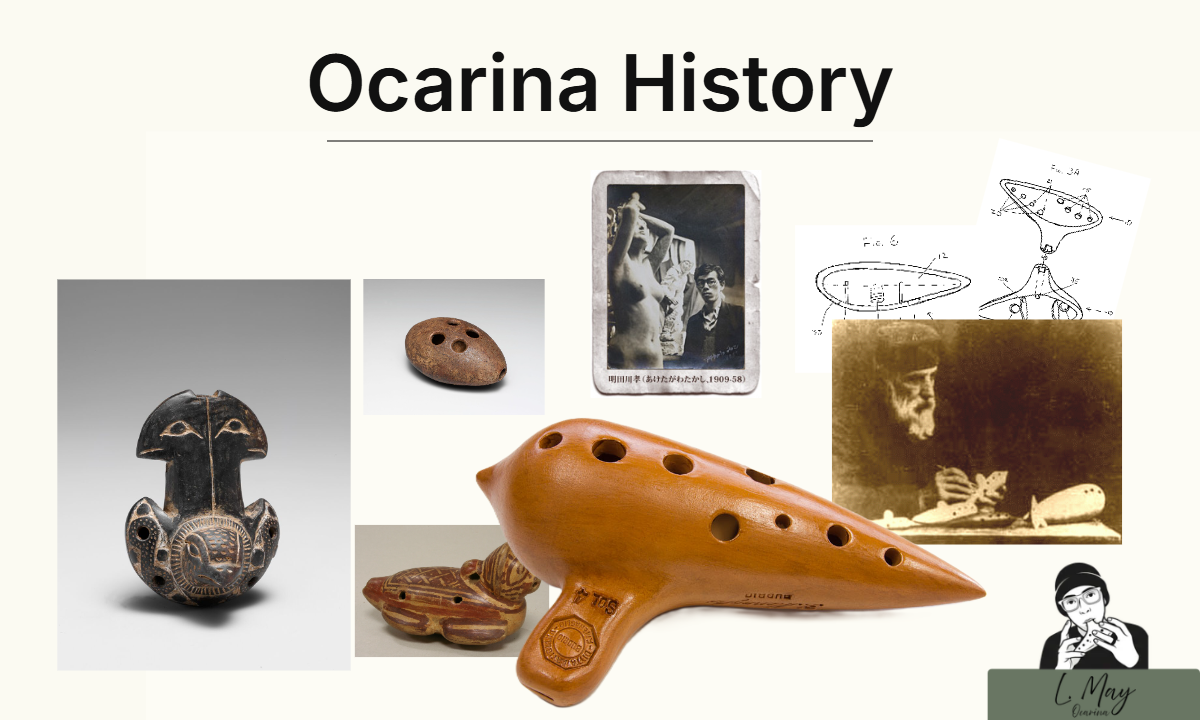
The ocarina is a very ancient wind musical instrument with ties to various cultures up to the present day. This article is a general overview of the instrument's origin, its evolution into the modern version, and a look at its role in popular culture.
Written by Maycon Lopes.
- Published
- Updated
What is an ocarina?
The ocarina is a wind musical instrument that belongs to the flute family. Its sound is produced by air vibrating inside a closed chamber, functioning exactly like a Helmholtz resonator (the same principle as blowing across the neck of a bottle). This makes the ocarina a distinct type of flute, as it does not rely on the length of a tube to determine the pitch of the notes, allowing it to be a compact musical instrument.
At first glance, the ocarina seems like a simple musical instrument. In practice, it brings together several worlds at once: archaeology, ceramics, acoustics, craftsmanship, and pop culture. It is one of those artifacts that have crossed centuries without losing their ability to surprise. To some, it looks like a simple toy; to others, a complete instrument capable of performing both concert pieces and nostalgic video game melodies. And in each of these contexts, it remains instantly recognizable by its unique timbre.
Below, the Gruppo Ocarinistico Budriese at the “Rooftop Concert in Shanghai”, performing the classic “Tarantella Napoletana”.

Before the modern ocarina
The idea of producing sound inside a hollow chamber is ancient. Similar wind instruments exist across different regions of the world, especially in China and the pre-Columbian Americas. The Metropolitan Museum of Art in New York, for example, holds records of Chinese xun and ancient ocarinas from the Americas, which helps demonstrate that the vessel flute family did not originate in a single place.
Galeria de imagens
Historical photos of ancient ocarinas
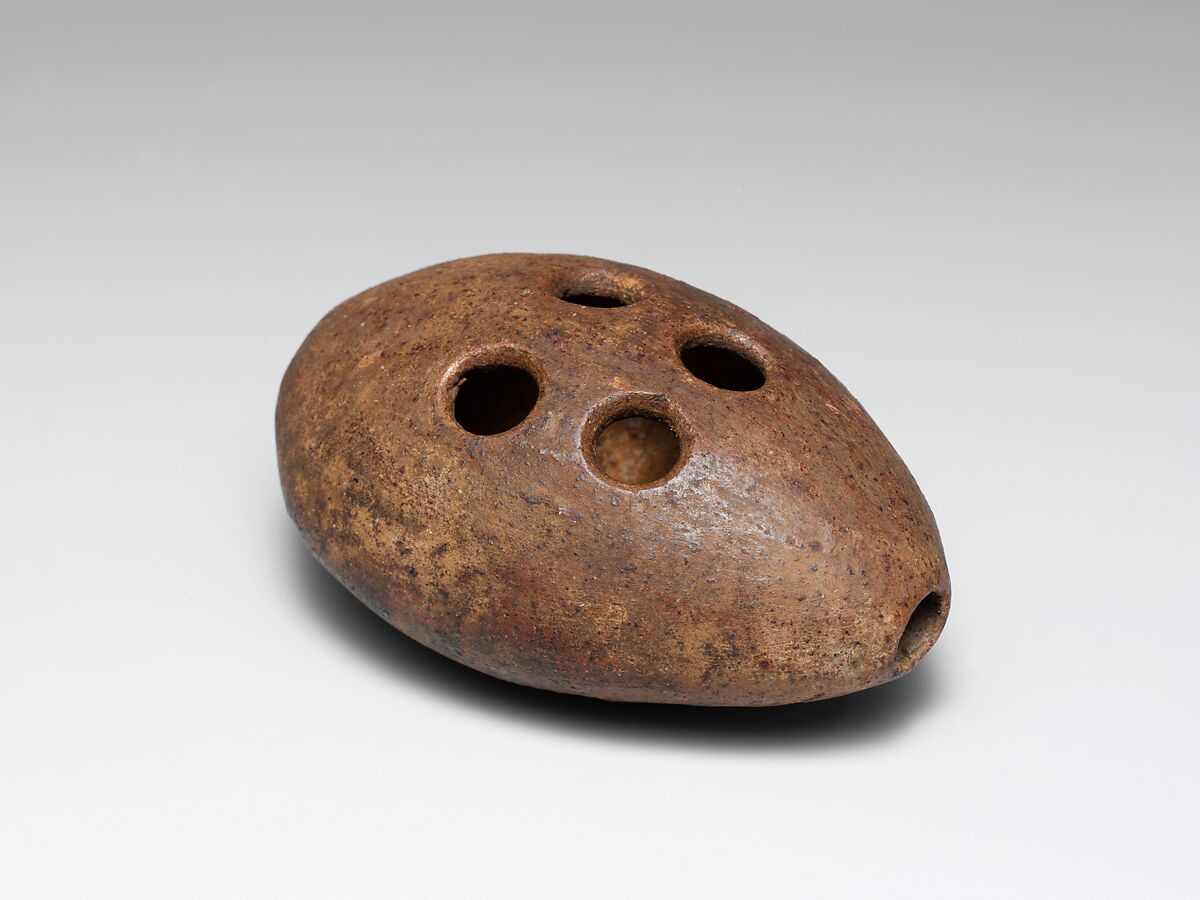
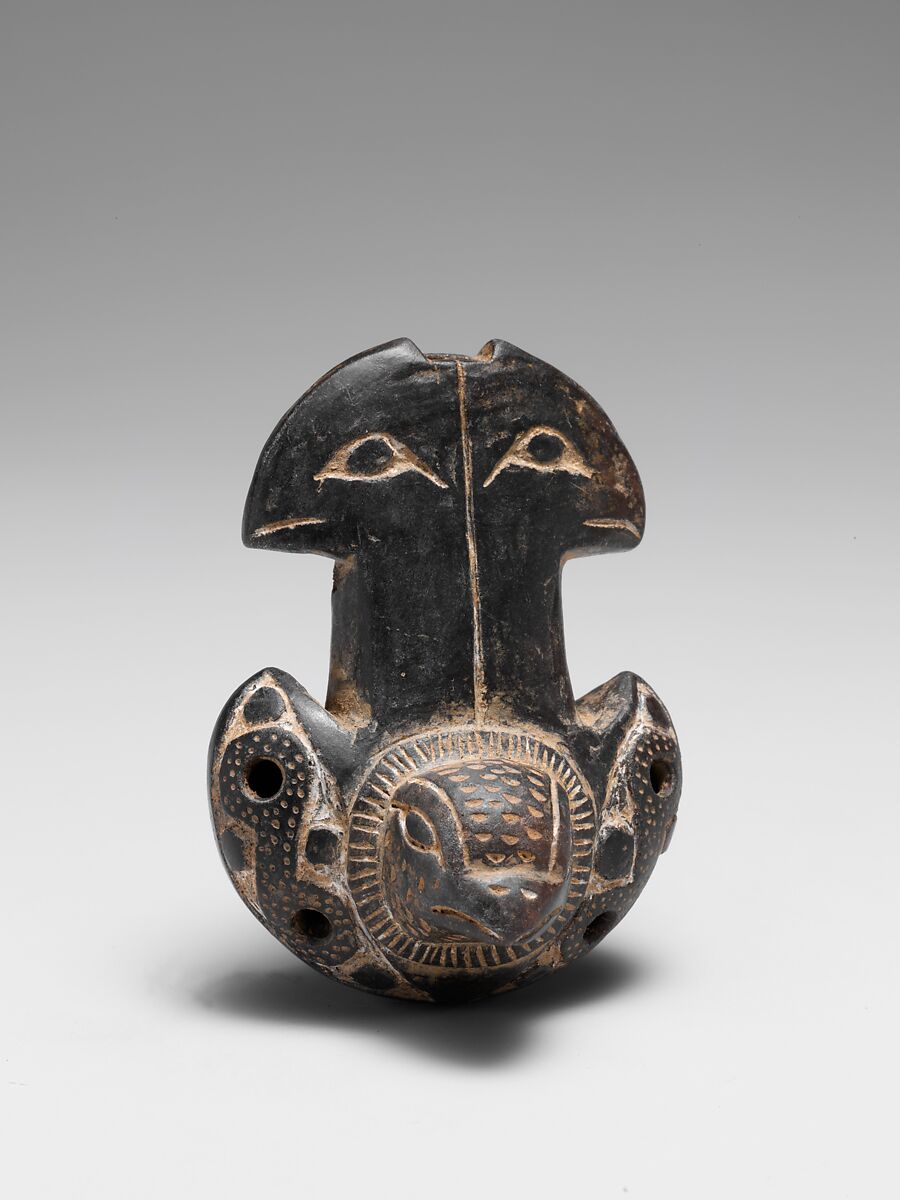
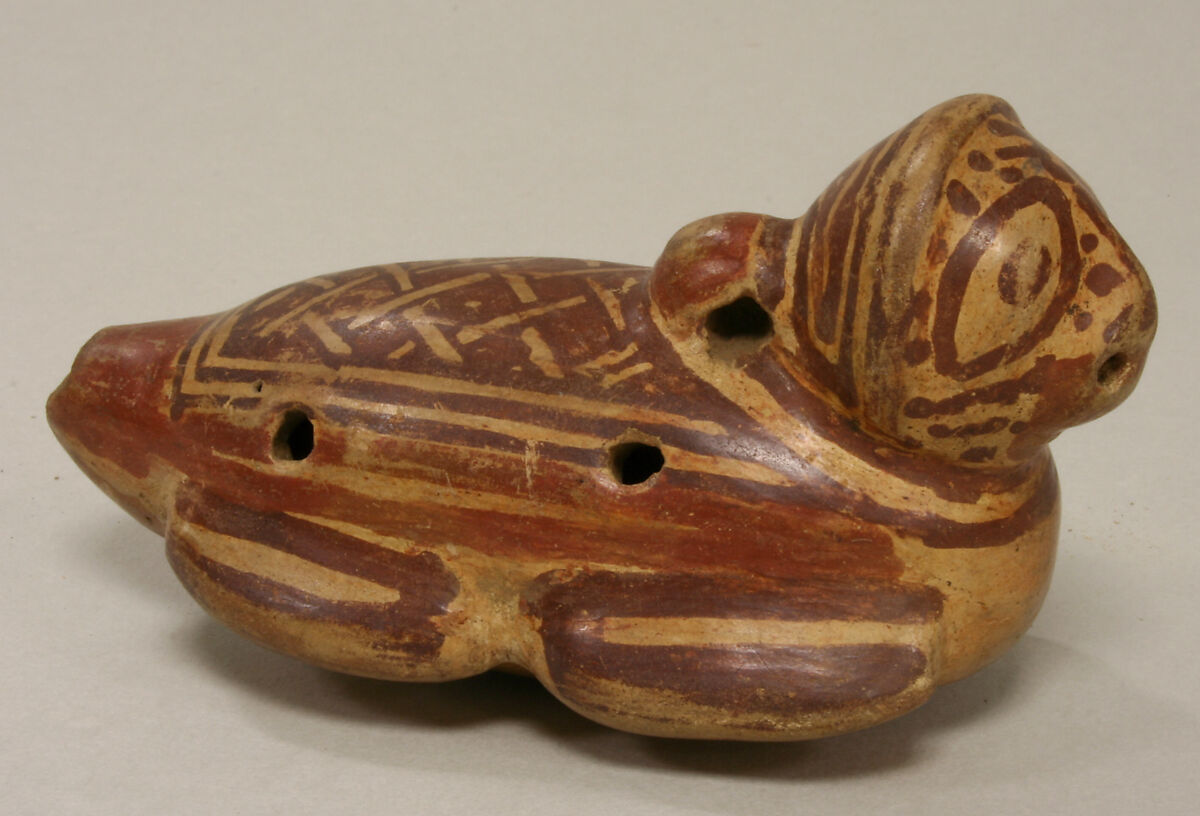
In China, the xun is one of the best-known examples of this realm. It is typically associated with oval or rounded shapes and a deep, focused sound. In the Americas, especially in regions now belonging to Mexico, Central America, and the Andes, clay vessel flutes shaped like animals, human figures, and geometric forms emerged throughout history. Many of these pieces served ceremonial, recreational, or symbolic purposes, rather than purely musical ones.
As we can see, the ocarina did not appear as an isolated, fully formed invention. It is the result of a long tradition of experimentation with clay, air, and form, as well as intercultural exchanges: what changes from one culture to another is the method of construction, decoration, and use of the instrument, not its basic acoustic logic.
The ocarina in the pre-Columbian Americas
Among the most fascinating examples are the ocarinas produced by pre-Columbian cultures in the Americas. Many of them were small sonic sculptures shaped like birds, frogs, mythical animals, human figures, and representations of hybrid beings. In some cases, the instrument had two, four, or more fingerholes; in others, there were more complex pieces with multiple chambers or mechanisms that allowed for specific sound effects.
These instruments were not necessarily designed according to the logic of European music, which would emerge much later. Instead, they could be linked to rituals, festivals, community practices, and religious symbolism.
It is important to keep in mind that much of what we know about these cultures reaches us through archaeological finds, meaning that part of the interpretation is always careful and indirect… but it is well known that the peoples of the Americas produced some of the oldest and most sophisticated vessel flutes known to us.
Giuseppe Donati and the modern shape of the ocarina
The ocarina as a modern instrument—more or less in the shape known today and in the sense of a family of tuned instruments for broader musical performance—is tied to the Italian Giuseppe Donati, from Budrio, near Bologna. Many historical sources place his invention around 1853, when he was still very young.
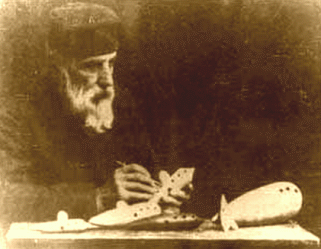
Still in his youth, Donati likely observed the small clay flutes that circulated at fairs and in folk settings, transforming that object into something more stable, better tuned, and more suitable for musical performance. His work was not merely “inventing a shape”; it was reorganizing an entire instrument so that it could function as a musical language.
Donati’s innovation had several decisive effects: (i) it consolidated an ocarina shape that remains recognizable to this day; (ii) it helped systematize fingering and tuning; (iii) it expanded the concept of ensemble playing with instruments of different sizes; (iv) it elevated the ocarina from its exclusive place as a folk curiosity and brought it closer to the stage.
That is why Budrio, Italy, holds a central place in this history. Rather than just being the place where the modern instrument appeared, the town became a benchmark for maker craftsmanship and musical heritage, representing an entire tradition of building, teaching, and performance that continues to this day.
The ocarina ensemble
Starting with Donati, the ocarina gained a collective dimension; it was no longer just a solo instrument, but a family of instruments tuned in different registers, capable of playing together as a small ensemble, as demonstrated in the video above by the Gruppo Ocarinistico Budriese.
I believe this was one of the main reasons the ocarina grew in popularity in 19th-century Europe. The instrument was not just exotic; it was also practical, with adequate timbre, projection, and acoustic identity. In parlor settings, public performances, solos, or organized groups, the ocarina could now sound distinct, joyful, and memorable.
Many historical sources on Budrio and its local tradition show that the ocarina was quickly associated with both popular curiosity and organized music. And one more thing: the development of ocarina ensembles helped build a repertoire, which in turn helps solidify the tradition. I believe that without its own repertoire, an instrument is just an ordinary object that can be replaced by a similar one. But when there is a specific repertoire for that instrument, it truly becomes a genuine musical instrument with its own musical identity, not just a cultural one.
Craftsmanship, manufacturing, and technical evolution
In the 19th and early 20th centuries, ocarina making underwent significant refinement. In Budrio and other European centers, artisans emerged who refined molds, standardized dimensions, and sought greater tonal stability, thus developing more consistent larger-scale production.
There are historical records of makers linked to the Italian tradition, such as Cesare Vicinelli and other figures from the Emilian school, who helped consolidate the quality of the instrument. At the same time, the ocarina began to be produced in various materials and shapes: terracotta, ceramic, wood, metal, and plastic.
This transition is important because it highlights the distinction between a handcrafted instrument and a commercial one. The ocarina survived in both worlds. It continued to be crafted by meticulous artisans, but it was also adapted for larger-scale production using materials that were cheaper and more durable for transport.
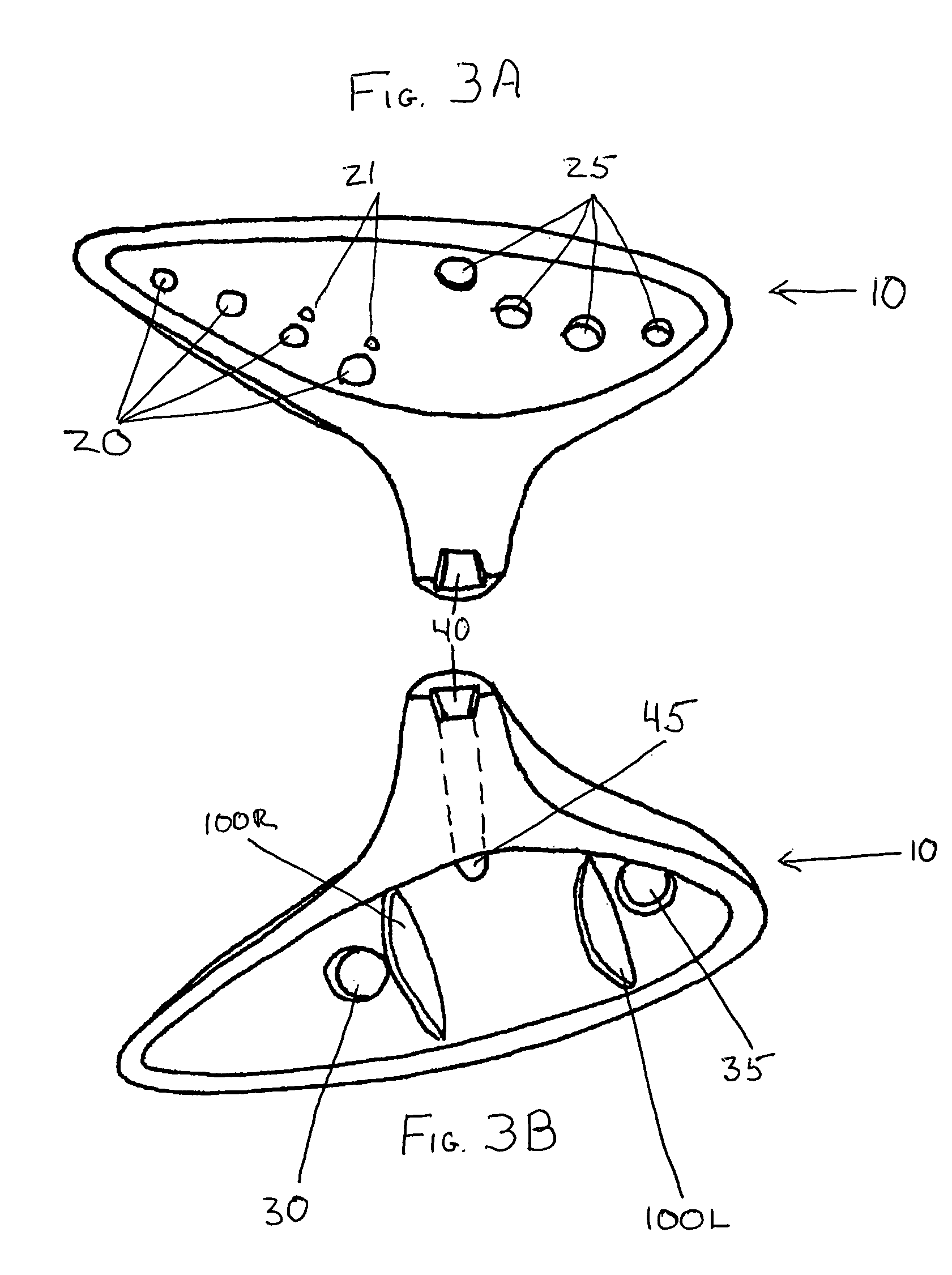
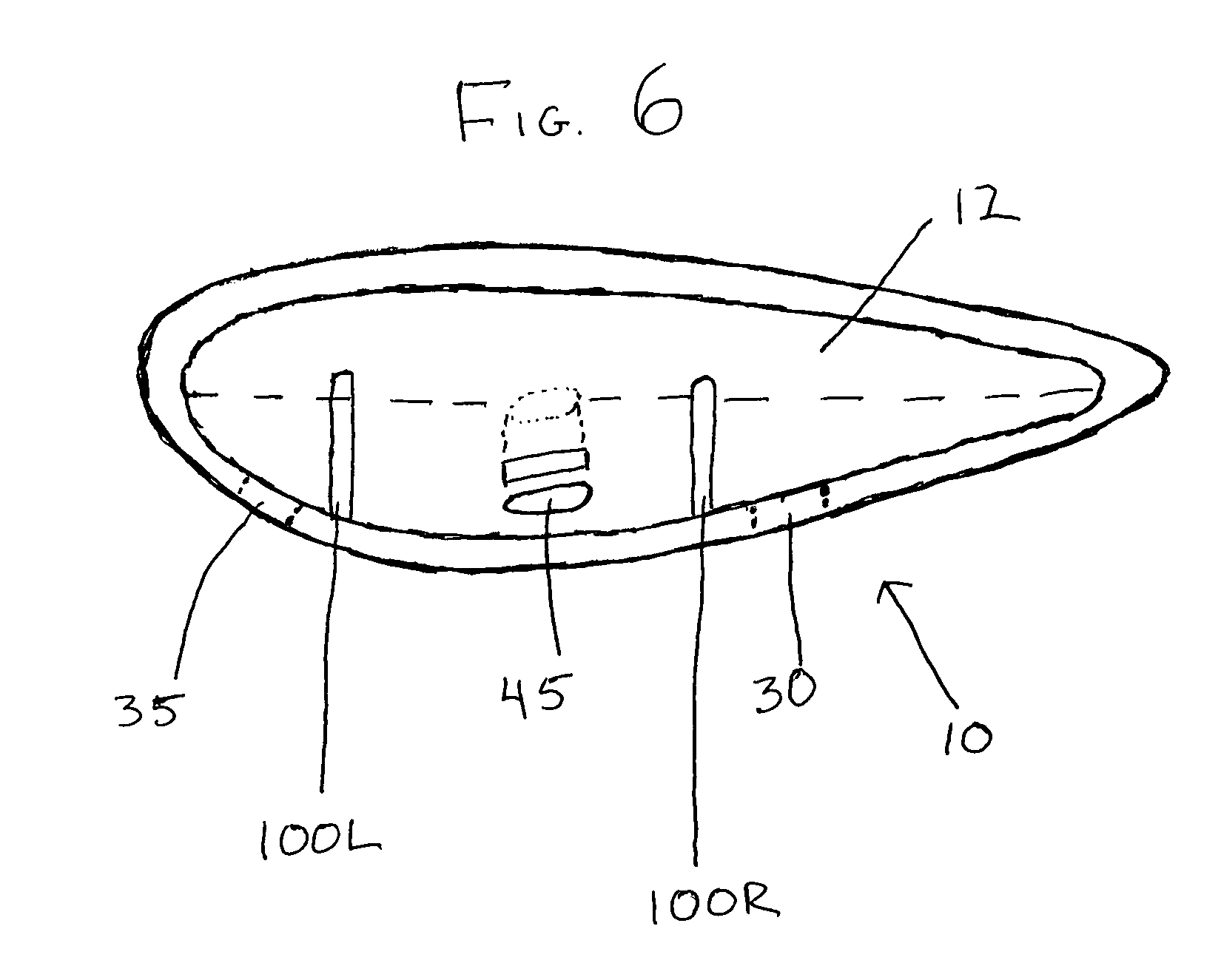
In the 20th century, this trend intensified. There are historical patents for mass-produced plastic ocarinas, such as patent US2145605A by the Waterbury Button Co., as well as more recent patents dealing with sound quality improvements using internal partitions, such as US7799980B1. These patents do not mean the instrument became “more real”; they simply signify that it continued to be an object of research and “reinvention”.
Galeria de imagens
Images by inventor Norman Spencer Register, author of patent US7799980B1
The 10-hole ocarina and other fingering systems
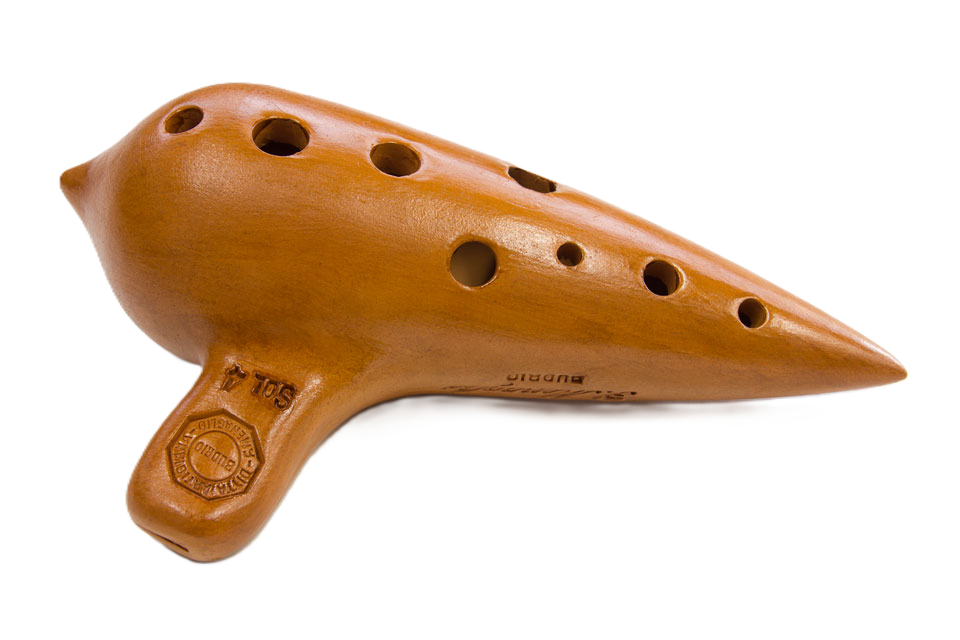
One of the most widely known ocarina designs in the contemporary West is the transverse 10-hole model, though it is neither the only design, nor necessarily the best or oldest.
The history of the instrument showcases models of various sizes and fingering systems. There are 4, 6, 8, 10, 12, or more hole ocarinas; there are inline and transverse models; there are educational versions and concert instruments. The number of holes alone does not define the quality of the instrument; it simply reflects a design choice and/or personal preference.
The 12-hole ocarina, closely associated with Japan and modern schools of playing, brought greater chromatic flexibility and helped expand the available repertoire. At the same time, smaller instruments—simpler or with a more limited range—continue to make sense in educational and folk contexts.
The Japanese case and contemporary expansion
The presence of the ocarina in Japan deserves special mention because it was there that the instrument gained new life in the 20th century. Rather than just being imported as a European curiosity, it was adapted, studied, and refined within another cultural context.
An important figure in this process is the sculptor Takashi Aketagawa, frequently cited in historical discussions on the development of Japanese ocarinas into the modern 12-hole model. Over time, making and playing schools emerged that favored greater pitch control, better high-register response, and more ergonomic fingering systems.

The sound of the ocarina
Part of the ocarina’s fascination comes from its timbre. It has a tone that can sound sweet, direct, almost vocal. It is not an instrument with immense volume, but it is highly expressive. In many registers, its voice feels close to human speech: simple, clear, with a sweetness that quickly draws attention.
From an acoustic standpoint, this happens because the ocarina does not rely primarily on an air column in a tube. What vibrates is the mass of air inside the cavity. This characteristic also explains a known limitation of the instrument: it does not behave like a standard transverse flute, which can overblow into higher registers in the same way. In other words, it is not possible to overblow notes into higher octaves.
This is not a defect. It is its identity. The ocarina has its own acoustic logic and, when well crafted, can possess a purity of tone that makes it highly recognizable.
Pop culture and renewed interest in the instrument
In the late 1990s, the ocarina received a massive cultural boost with The Legend of Zelda: Ocarina of Time. The game did not invent the instrument, but it turned it into a symbol for an entire generation. For many people, it was the first time the word “ocarina” made a lasting impression.
Galeria de imagens
12-hole ocarina, inspired by the ocarina from The Legend of Zelda: Ocarina of Time
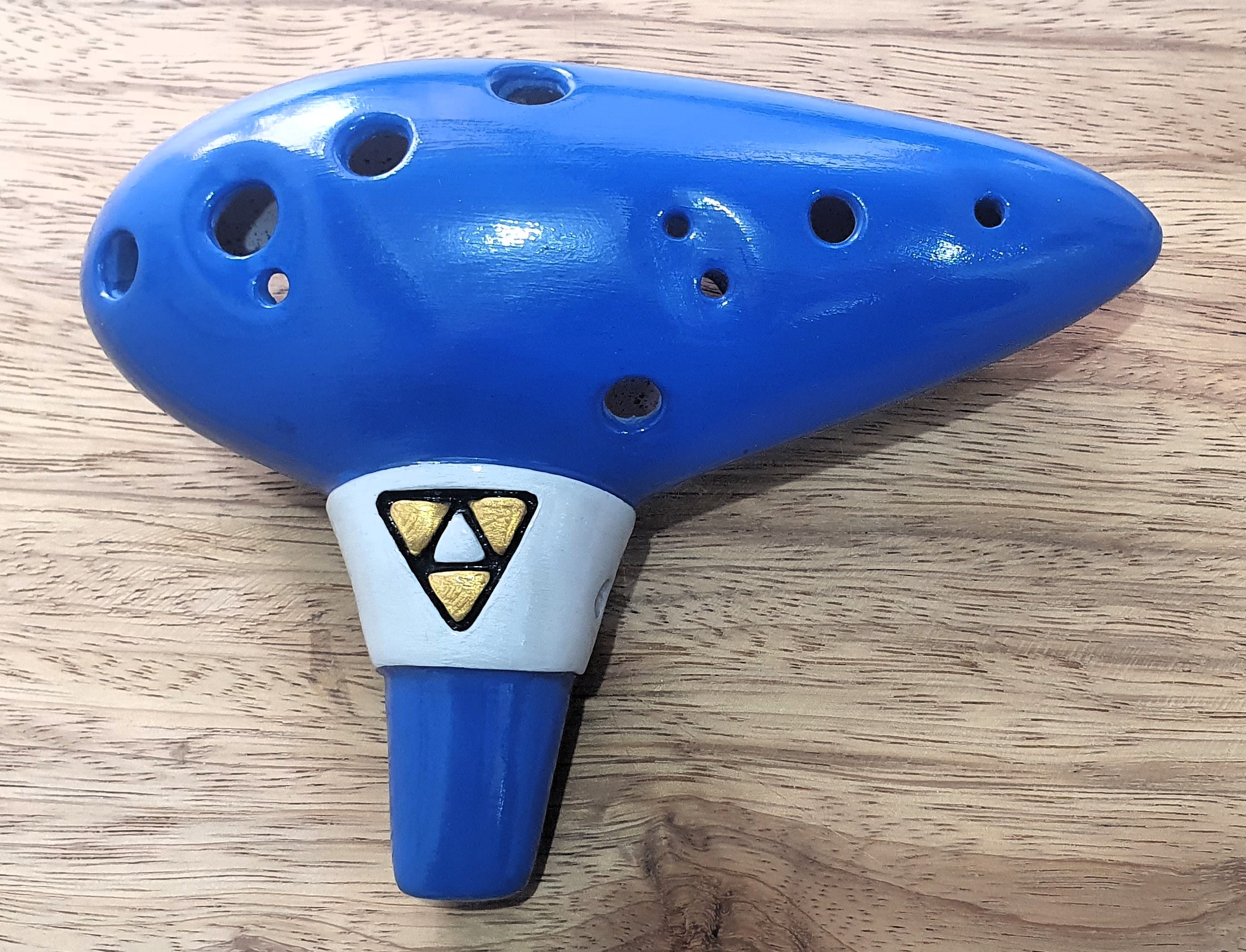
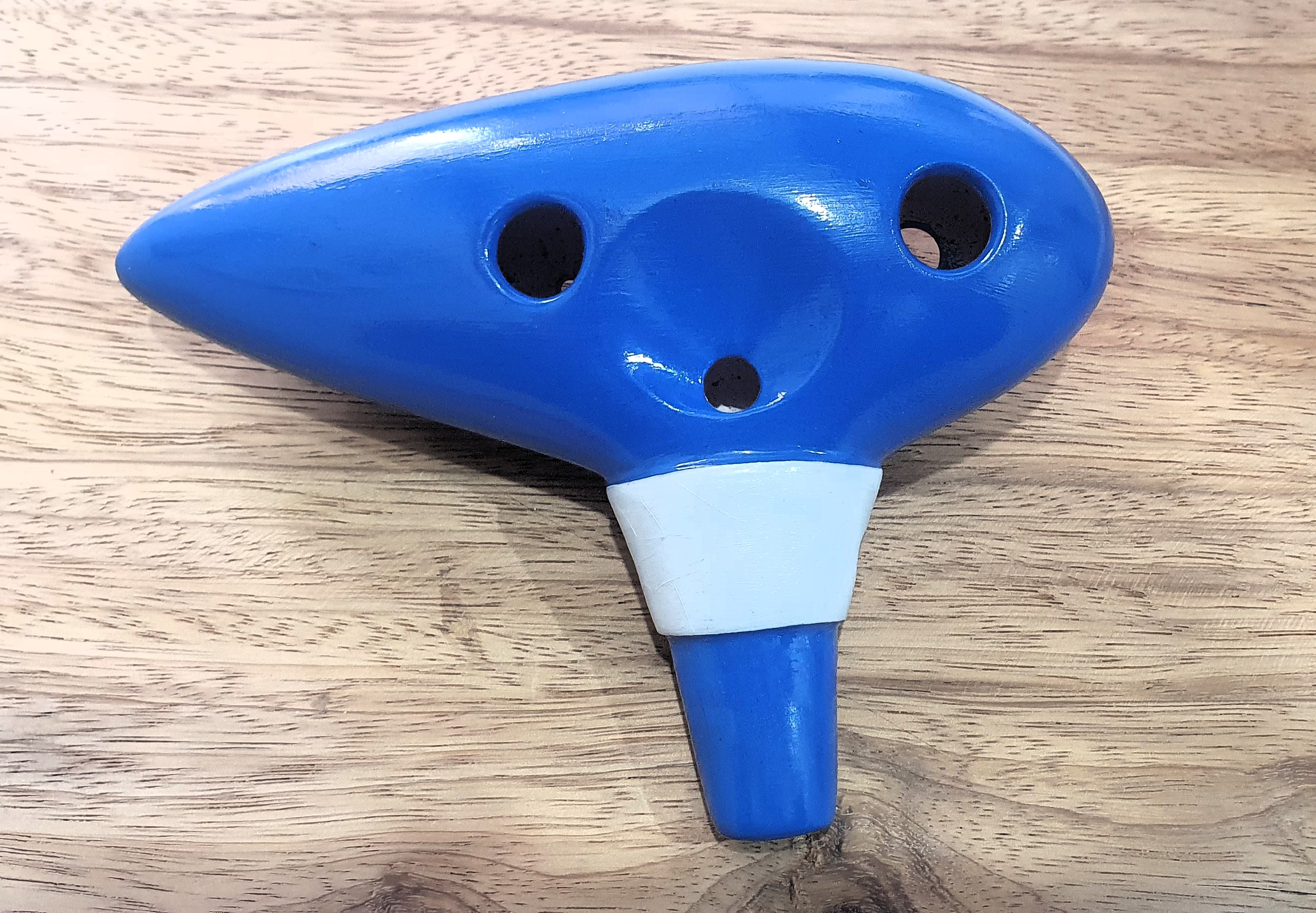
This popularization had a significant impact for two main reasons: first, it heightened curiosity about the instrument, awakening new enthusiasts who were surprised to discover that the instrument actually exists in real life and not just in the game. Second, it gave the ocarina a contemporary image rather than a purely historical one, making it once again something desirable to play, collect, and learn.
After that, communities of musicians, artisans, and collectors began sharing the instrument through videos, forums, specialized shops, and home recordings. The internet helped the ocarina cross borders that previously required tours, catalogs, or museum collections.
The ocarina today
Today, the ocarina lives in more than one world at the same time. It appears in music lessons, folk repertoire, solo performances, studio recordings, soundtracks, and enthusiast communities. It remains a handcrafted object, but also a piece of global culture.
Perhaps that is the most beautiful aspect of its story: the ocarina never had to choose between being ancient and being modern. It managed to be both at the same time.
In conclusion…
The history of the ocarina is neither linear nor simple. It begins in ancient vessel flute traditions, takes on its modern shape in 19th-century Italy with Giuseppe Donati, receives a new version at the hands of Japan’s Takashi Aketagawa, and spreads across making and playing schools in different countries, once again gaining global prominence with the pop culture of the late 20th century.
It is a small instrument with a massive history. And perhaps that is precisely what makes it so fascinating.
References
- The Metropolitan Museum of Art - Xun
- The Metropolitan Museum of Art - Pre-Columbian Ocarina
- The Metropolitan Museum of Art - Ocarina Guanacaste-Nicoya
- Peabody Museum - Ocarinas of the Americas
- Ocarina di Budrio - La storia
- Lombardia Beni Culturali - Ocarina, Donati, Giuseppe
- Google Patents - US2145605A, Ocarina
- Google Patents - US7799980B1, Ocarina with internal partitions
- Aketagawa Museum